Great Week on the Water with the Pelagic Northern Cruise
By Meryl Jacobson
After months of preparation, both Pelagic summer cruises are complete. The northern cruise ended just yesterday—and what a week it was.
The start of the cruise was a bit precarious, with rain and thunderstorms in the forecast. While Mother Nature tried to throw us a curveball, we Pelagians adapted quickly. Since our kickoff dinner was scheduled for August 3, many boats adjusted their plans to arrive in Scituate a day early and others opted to join the fleet in Plymouth or the following day in Provincetown to avoid the storm. One boat braved the rough weather and reached Scituate on schedule, and unfortunately one opted out entirely.
By late Monday afternoon, the rains had stopped and skies cleared for our kickoff dinner. Participants were randomly assigned to one of three tables— creating a chance to meet new Pelagians and begin the week with lively conversation. It was a big hit! Any initial hesitation about sitting apart from one’s own crew or partner ebbed quickly, and was replaced by the genuine enjoyment of meeting new people.
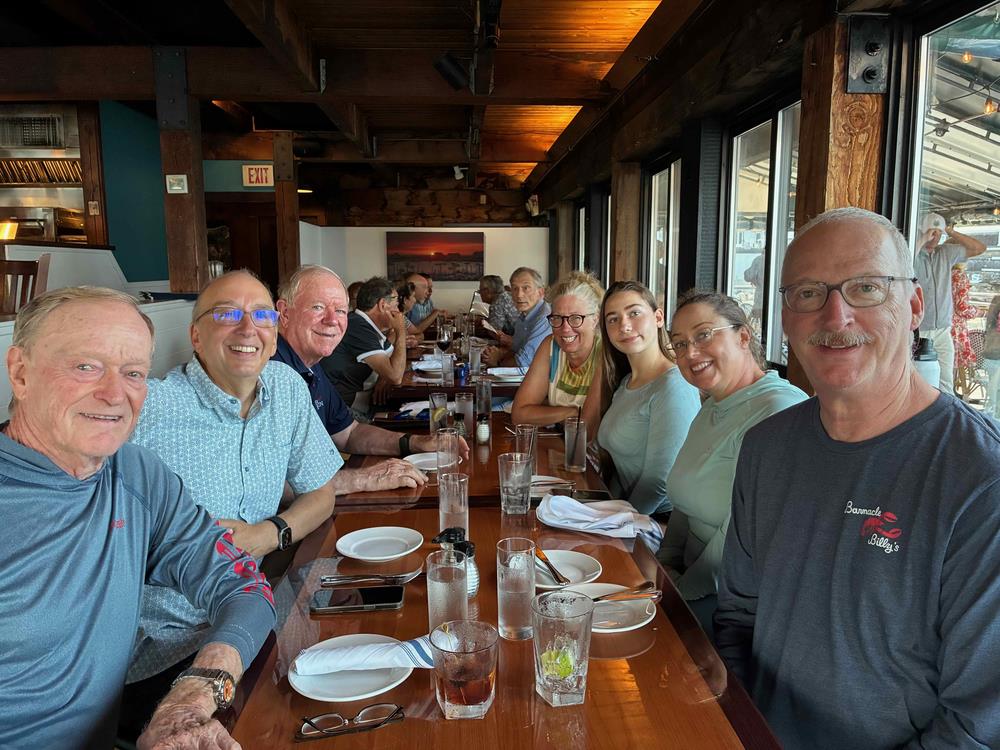
Russ Vickers, Joao Geada, Craig Spear, Mary Thorndike, Stacy Okada, Matt Sweeney
(Source: Ellen O'Connell)
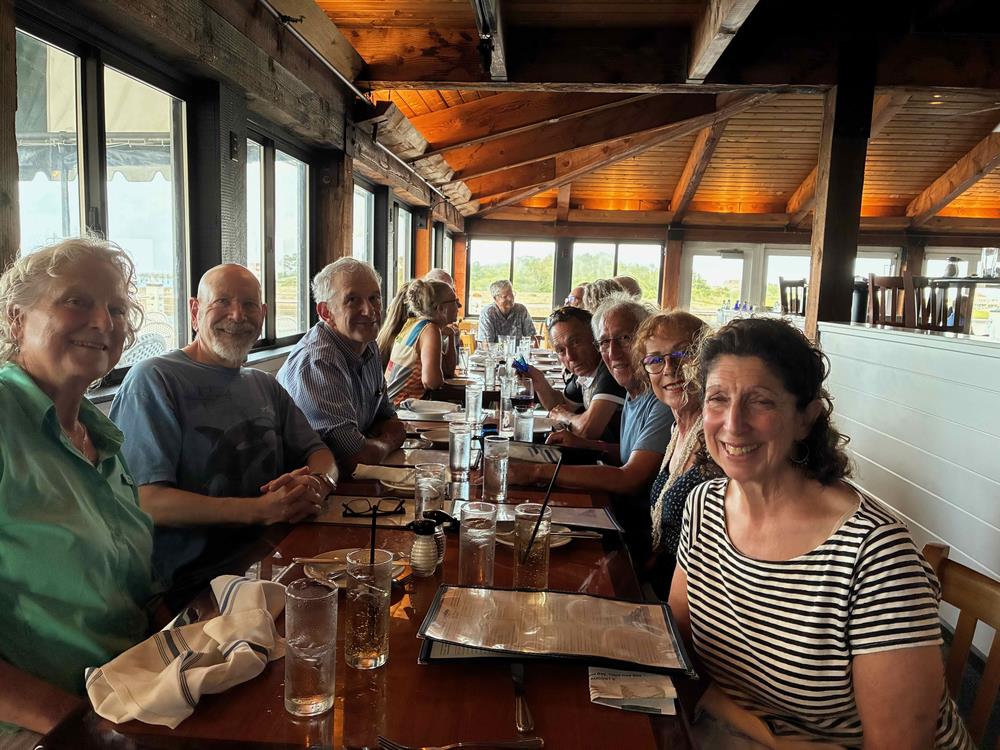
Lee Grimes, Barry Perlman, John Halporn, Rich Afrikian, Barry Needalman, Aida Ferro di Olivera, Meryl Jacobson (Source: Ellen O'Connell)
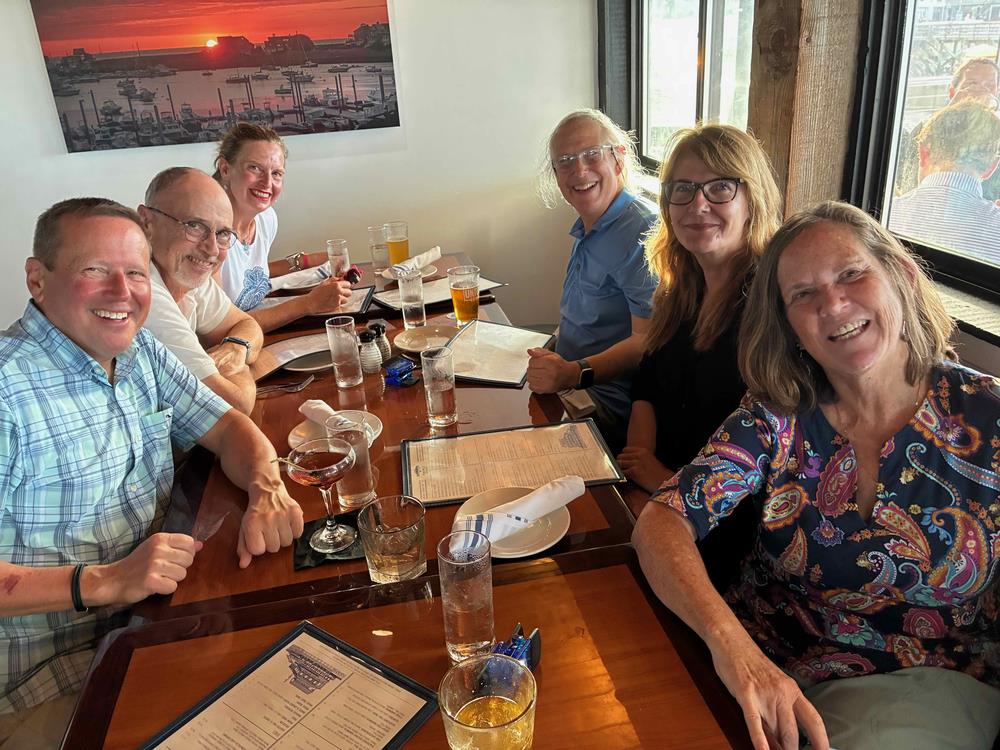
Mike Banic, Mike Rothman, Sunny Schettler, D. Dines, Nichol Geada, Ellen O'Connell
(Source: Ellen O'Connell)
The next day we sailed to Plymouth and many commented on the long, narrow slog into the harbor that is made more challenging by large boat traffic and large wakes. Once settled, crews met informally for walks, dinner, and ice cream. The Mayflower had returned to its berth after Sail Boston, tourists were photographing Plymouth Rock, and the waterfront was bustling.
From Plymouth we set sail for Provincetown. Most boats motored initially, then switched to full sail about halfway across. The crew of s/v Apple Blossom and other boats had the thrill of spotting a nearby pilot whale that was initially mistaken for a bird or flotsam.
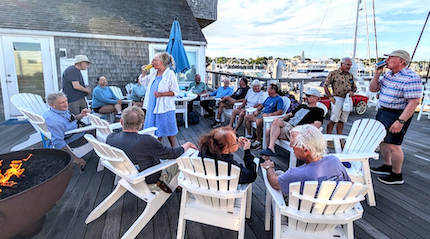
Pelagic Reception at the Captain Lounge of the Provincetown Marina (Source: Meryl Jacobson)
Upon arrival In Provincetown, thirty or so Pelagians gathered at the marina’s captains lounge for appetizers and drinks. Chairs encircled the fire pit, and crews shared a generous spread of appetizers and beverages. We could have stayed for hours, but eventually we returned the chairs to their tables and headed out for dinner.
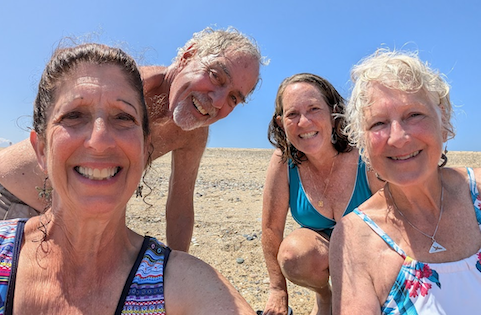
Maryl Jacobson, Russ Ganz, Ellen O'Connell and Lee Grimes at Long Point Beach
(Source: Meryl Jacobson)
The following a layover day during which some swam from their boats or from Long Point Beach reached by water shuttle. The pontoon water shuttle beached itself and dropped a horizontal ladder that was challenging to navigate, and the soft sand gave way underfoot. The steep shoreline and strong current even swept one person off her feet. Later, many gathered again at the fire pit before dispersing for dinner. Pelagians sampled a wide range of Provincetown restaurants, from casual cafés to fine dining.
Extreme heat, minimal wind directly astern, and long hours under power made for a challenging passage. Those without biminis searched for whatever shade the boom could provide.
And then came the highlight of the day—and, for some, the highlight of the entire cruise. Whales!
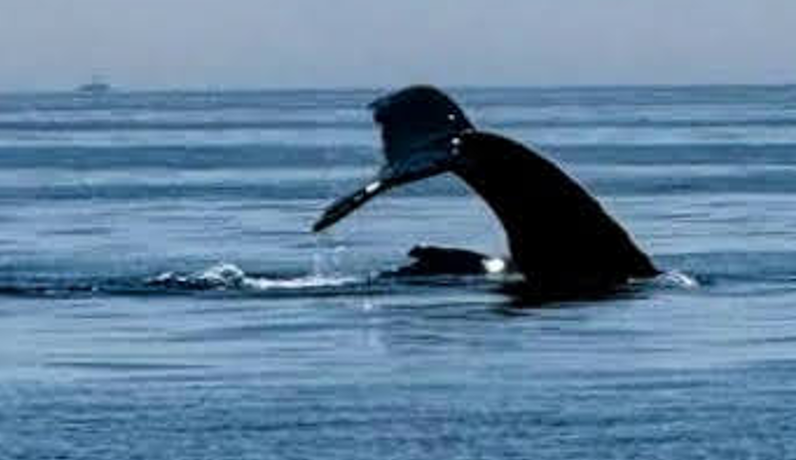
Whale of tail! (Source: Joao Geada)
Several boats spotted a mother whale and two calves basking in the sun. We watched them fluke and spout as the trio moved calmly near our boats. Engines were shut down, speeds reduced, and one boat remained watching for nearly an hour.We arrived in Scituate hot, sunburned, and tired, but quickly revived ourselves to meet fellow Pelagians. Some boats were moored at the Satuit Boat Club that provided a convenient gathering spot. Scituate was crowded for the start of Heritage Days, and crews hoped to eat early and return to their boats for the boat parade and luminaria.
The harbor was lit with candles placed inside gallon milk jugs—hundreds of them. The boat parade was impressive, with an estimated fifty decorated and illuminated boats, mostly powerboats. For many, it was a unique and memorable experience.
The final full day of the cruise was another hot one. Some boats returned by afternoon to their home ports, having begun the cruise early; others stayed to explore the festival. Front Street was closed, lined with vendors in white tents, and additional vendors and a music stage filled the large parking area behind them. A wonderful event, though the heat limited how long many wanted to stay ashore.
That afternoon, some Pelagians visited the museum at the foot of Scituate Light, open specially for the festival. A swim off the boat was essential after the hot walk. Others waited for cooler temperatures before walking to the lighthouse, stopping at Museum Beach to cool down and dip their toes in the sand.
Our final evening was spent dining aboard or exploring Scituate’s restaurants. A small fireworks display capped the night. Then it was time to tidy up and prepare for the next day’s sail home.
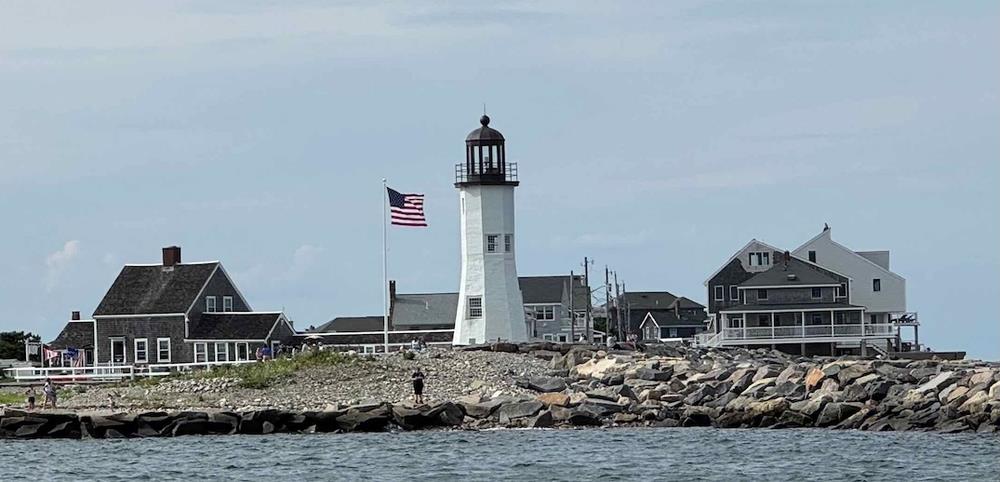
Westerly winds blowing in Scituate Harbor (Source: Mike Banic)
Sunday August 9 delivered a perfect sailing day. A westerly wind filled in as the day progressed, carrying us smoothly toward our home ports—a fitting end to a cruise that everyone seemed to truly enjoy.After months of planning, it’s done. Both Pelagic cruises were successful, and in just five months we begin planning again. Thank you to everyone who participated and embraced new experiences—you are what made these cruises exceptional. And thank you to Pelagic for the chip clips distributed to participants, a surprisingly useful souvenir.
Summer isn’t over yet. Keep sailing—and remember that the Great Misery Rendezvous is coming up on August 18–19.